Start with the paste, not a pile of extra seasoning.
A tub of curry paste is a head start on dinner. Chili, aromatics and spices are already blended together, ready to become part of a finished dish. What you add next determines the sauce, texture and balance. Coconut milk can give a curry body; stock can take a recipe in a lighter direction; vegetables, meat or seafood give the sauce something to carry.
It helps to think of paste as an ingredient rather than a finished meal. A spoonful straight from the tub will be more concentrated than the curry you eventually eat. The useful question is not simply whether a paste tastes strong. It is how much your recipe needs for the quantity of liquid and other ingredients you plan to cook.
Our curry comparison is a good place to choose a style. Once you have a paste in mind, read the selected product page and the label on the pack you receive. Product formulas and packaging can change. The current package is especially important for ingredients, allergens, preparation and storage.
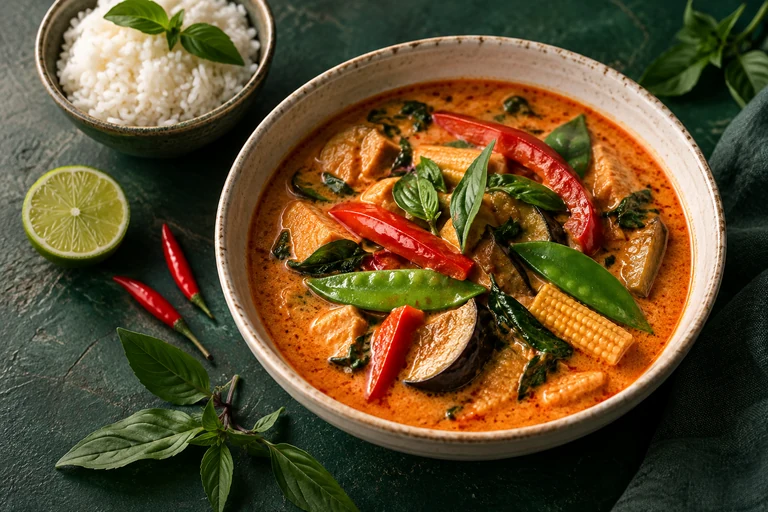
An editorial serving illustration, rather than a photograph of a tested recipe.
Choose a direction you already enjoy.
If your favorite order is a red coconut curry, begin with red curry paste and a recipe for that dish. Red chili, lemongrass and savory ingredients provide a familiar foundation. You can vary the vegetables without asking a completely different sauce to do the same job.
Green curry paste moves toward green chili and a different aromatic profile. Green is not a promise of gentleness. Treat the first batch as a chance to learn how the paste behaves in your recipe, especially if you have previously cooked with a different brand.
Yellow curry paste gives you a spice-led starting point that works naturally with a golden coconut curry. Potatoes and onions can make a satisfying combination. The color still tells you less about the final heat than the amount of paste, the liquid and the other ingredients.
Panang and Massaman are worth choosing for their own character. Panang recipes often aim for a coating coconut sauce. Massaman brings warm spice notes that suit a comforting bowl with potatoes and onions. Start with a recipe for the style you have chosen, rather than assuming all five pastes are interchangeable.
Match the pack to your cooking rhythm.
Our selected red and green products come in 1 kg tubs. The yellow selection is labeled 14 oz, commonly shown as 400 g, and the Panang and Massaman selections are 400 g tubs. Those are meaningful differences if you cook curry once a week, cook for a household, or only make it occasionally.
A larger pack is not automatically the better choice. Consider the storage directions, the room you have and how often you expect to use it after opening. Check the price of the exact pack rather than comparing the price of a large tub with a small one as though the amounts were equal.
Check dietary needs before planning the dish.
Several of the pastes in this pantry contain shrimp. A curry made with vegetables is not necessarily vegetarian if its paste contains seafood. Likewise, the word “coconut” in a recipe does not tell you whether every other ingredient fits the people you are cooking for.
The selected yellow listing has conflicting wording about shrimp between its headline and ingredient information. We have not turned that uncertainty into a vegetarian claim. Read the current package and obtain product-specific confirmation when an ingredient matters to a restricted diet. Check your stock, sauces and garnishes as well as the paste.
Build a curry in a sensible order.
You do not need to rush once the pan is on. Read the full recipe first, then put the ingredients within reach. Measure the paste and liquid, prepare your vegetables, and have the protein ready for its turn. A short preparation pause is easier than chopping while a concentrated paste catches on the bottom of a pan.
Use a recipe that identifies Thai curry paste and the style you have bought. A recipe written for a mild curry sauce, a dry spice powder or a different brand’s paste can use very different quantities. Keep the recipe’s starting amount until you understand the particular combination in your kitchen.
One useful habit
Write down what you used after the meal: paste, coconut milk, main ingredients and any changes. “A little less paste next time” is more useful when you know what the first amount was.
Give the paste the treatment the recipe calls for.
Many curry recipes cook the paste in oil or coconut cream before the remaining liquid goes in. This stage brings the paste into the dish and gives you a chance to stir it evenly through the fat. Follow your chosen recipe and your pack’s directions for the heat and timing.
Keep the paste moving rather than leaving it unattended in a dry, hot pan. A fragrant aroma is useful feedback, but it is not a substitute for the instructions. If the pan is getting too dry, use the recipe’s next step rather than trying to force a longer frying time.
Add the liquid deliberately.
Stir the paste into the liquid so it disperses evenly. Coconut milk varies in richness and consistency, and different recipes call for different amounts. Shake or stir it as directed on its container, then measure what your recipe needs. Do not judge the final sauce before the paste and liquid have had a chance to come together.
If a recipe uses both coconut milk and water or stock, those ingredients have different roles. Extra coconut milk changes the body as well as the flavor. Stock may contribute salt. Keep track of additions so that an attempt to loosen the sauce does not quietly turn into extra seasoning.
Let cooking time decide when ingredients go in.
A potato chunk, a strip of bell pepper and a piece of delicate seafood do not cook at the same speed. Add ingredients in the sequence your recipe gives, and cut similar vegetables into similar sizes. This gives the firm pieces a fair chance to soften without keeping everything else in the pan for too long.
For a first batch, keep the ingredient list manageable. A few well-chosen vegetables are easier to cook evenly than every remaining item in the refrigerator. Once you understand the base, changing one ingredient at a time makes it easier to recognize what improved the meal.
The protein and its cut also matter. A recipe for a long, gentle braise cannot simply be given the timing of a quick chicken curry. Choose an appropriate recipe, check doneness and handle the food according to normal kitchen safety practices. The sauce’s appearance alone does not establish that the protein is ready.
Keep rice and garnishes in the plan.
If you want rice with dinner, start it early enough that the curry is not waiting around while the rice cooks. Plain rice can provide a useful counterpoint to an aromatic sauce. Put fresh herbs, lime wedges or other recipe-specific garnishes near the serving area so they are ready when the food is.
You do not have to use every garnish you have seen in a photograph. Follow the flavor of the dish and the recipe. A small amount of a suitable fresh ingredient can finish a bowl; a large handful of something unrelated can make it harder to taste what you liked about the curry in the first place.
Taste the finished sauce before adding more.
Curry paste already contributes seasoning. Shrimp paste and salt can be part of the blend, and stock or additional sauces can contribute more. Taste near the end of cooking before automatically reaching for salt, fish sauce, sugar or lime. It is easier to add a little than to remove it.
Balance is personal, but changing everything at once makes it hard to learn. Decide what is actually missing. Does the sauce need more intensity, a little sweetness, a brighter finish or a different consistency? Make a small adjustment, stir, and taste again once it has dispersed.
When the curry feels too intense
For the next batch, start with less paste. In the current batch, adding an appropriate amount of unseasoned liquid and ingredients can reduce concentration, but it also changes the size and texture of the meal. Use the liquid that belongs in the recipe rather than assuming any addition will have the same result.
Coconut milk is not a switch that makes a strongly seasoned curry mild without changing anything else. It adds richness and volume, and a large amount can move the dish away from the consistency you wanted. Make small changes and keep the rice or other accompaniment plain if that suits the meal.
When the sauce tastes too salty
Stop adding salty ingredients. Reducing a salty sauce further will concentrate it, so a longer simmer is unlikely to solve that particular problem. If practical, increase the recipe with suitable unseasoned ingredients and liquid, or set aside part of the concentrated sauce for another batch.
For a future attempt, note how much paste, stock and added sauce you used. The problem may be the combination rather than one ingredient alone. A simple written record can help you make a precise change instead of starting from guesswork every time.
When the sauce is thinner than you expected
First check whether the recipe is meant to produce a generous sauce or a coating one. A soup-like curry and a thicker Panang-style dish do not need to look identical. The vegetables may also release liquid during cooking, so it can help to wait until the ingredients are nearly ready before deciding.
A gentle reduction can thicken some sauces, but it also concentrates seasoning. Watch the ingredients as well as the liquid; keeping quick-cooking vegetables in the pan while reducing a sauce can leave them overdone. Choose a recipe written for your preferred texture next time.
When the flavor seems flat
Check that you used the correct paste quantity for the amount of liquid and food. Doubling the vegetables and coconut milk without considering the paste changes the whole balance. Stir the sauce thoroughly and taste it with an actual bite of the main ingredients, not just by itself.
Then follow the finishing steps in your recipe. An intended sweet, sour, salty or herbal element may still be missing. Add carefully, and resist using more of every ingredient as a general repair. Learning which small change helps is part of making the dish your own.
Keep sweet chili in its own lane.
Sweet chili sauce has a different purpose from curry paste. It is a condiment you can pour into a dipping bowl, use alongside spring rolls or add to a recipe that calls for a sweet chili finish. It does not need to become a coconut curry to be useful.
Serve a little on the side when people prefer different amounts. This lets crisp or grilled food keep its texture until it reaches the dip. If you are using the sauce as a glaze, follow the recipe’s timing and watch the heat: a sweet sauce can color quickly.
Confirm the exact bottle size in the purchase tab. The pictured bottle lists 10 fl oz by volume and 12 oz by net weight. Fluid ounces measure volume; ounces of net weight measure mass. Compare the same type of measurement when checking pack sizes or planning a larger order.
Scale a recipe without losing the useful details.
When you cook for more people, begin with the recipe’s ingredient quantities rather than guessing a larger spoonful of paste. Measure the liquid and paste consistently, and use a pan with enough space for the ingredients to cook as intended. A crowded pan changes how easily you can stir and how quickly liquid evaporates.
Seasoning is still a final decision, even when you have multiplied the recipe neatly. Different stocks and sauces bring different amounts of salt. Keep some of the optional finishing seasoning back, taste the cooked dish, and add it only if it helps. This is especially useful when you are using a paste for the first time.
For a smaller meal, scale the recipe in the other direction and choose a suitably sized pan. A shallow layer of sauce in a very wide pan can reduce more quickly than expected. Watch the consistency and the main ingredients together rather than using the clock as your only guide.
Keep a useful distinction between inspiration and a recipe.
A photograph can suggest a combination you would like to eat: curry, rice, vegetables and herbs. It cannot tell you the amount of paste, cooking sequence or final seasoning. Use a complete recipe for those decisions, especially when working with a new ingredient or a protein you do not often cook.
The product pages provide serving ideas and views of the selected packaging. Their purpose is to help you choose a starting point. Once you have your pack, read its directions alongside the recipe, prepare the ingredients, and make the meal in a sequence you can comfortably follow.
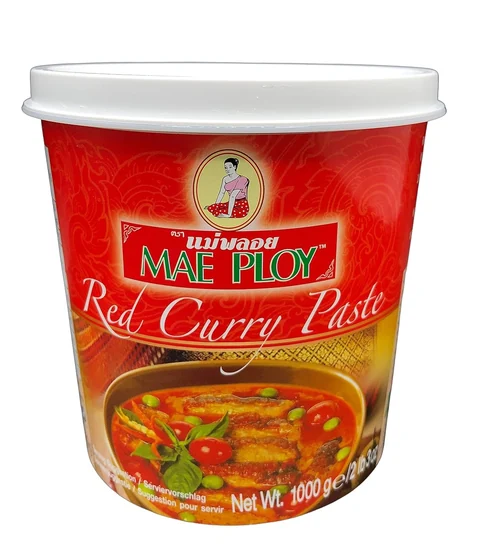 1 kg (2.2 lb)
RED CHILI & LEMONGRASS
Red Curry Paste
A savory red chili base for coconut curries and soups.
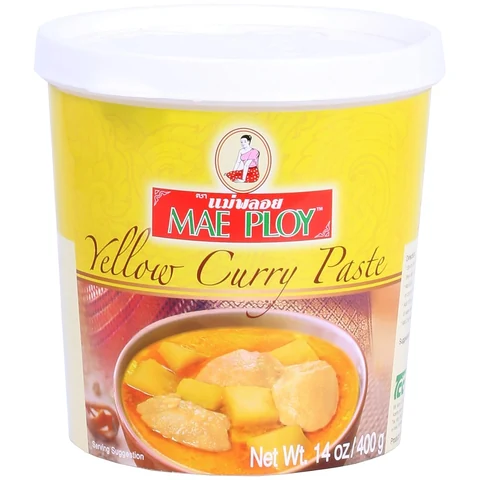 14 oz (400 g)
WARM SPICES & TURMERIC
Yellow Curry Paste
A spice-led paste for golden curries and comforting bowls.
Keep your pantry ready for the next meal.
Read the storage directions as soon as you open a pack. Use a clean utensil to take out paste and close the container carefully afterward. Keep the rim or cap clean, and follow the label’s refrigeration and after-opening guidance. A general pantry tip should not replace the instructions on your particular product.
Do not guess a shelf life from how full the tub looks or how often you cook. Check the best-before information and the condition of the package. If a seal is damaged or the food shows signs of spoilage, do not use it. For a product concern, retain the label and batch details when contacting the seller.
Plan a small set of flexible companions.
A few basics can make the paste easier to use: rice, the coconut milk or stock your recipes call for, and vegetables you enjoy. You can add fresh ingredients around that foundation without buying a separate pantry for every curry. Keep the plan realistic for the meals you actually cook.
It can also help to choose one paste first rather than opening several large tubs at once. Learn a dish you want to repeat, then add another style when you are ready for a different direction. Red, green, yellow, Panang and Massaman offer variety without requiring you to make every choice on the same evening.
Make the second batch easier than the first.
After dinner, record the useful details while you remember them. Note the paste and pack, the amount of liquid, the vegetables, the recipe and any seasoning changes. Add one sentence about the result: too strong, pleasantly aromatic, thinner than you wanted, or just right with rice.
Use that note for your next attempt. Change one thing deliberately and compare the result. Over a few meals, you will have a dependable approach that fits your pan, your ingredients and your taste. The paste gives you a starting point; the finished dish should work for the people at your table.